
About the SDEA · Our history
Almost 80 years of the SDEA
The Association was founded on 17 September 1947, and reaches its 80th anniversary in September 2027. From post-war shortages to the Creative Retail Awards, this is how a small group of display suppliers became the voice of the retail design and display industry.
Milestones
- 1947The National Display Equipment Association is founded at Grosvenor House, Park Lane.
- 1958Display Market Week, the Association’s own exhibition, opens at the Waldorf.
- 196626 British exhibitors at the first EuroShop in Düsseldorf.
- 1974A new name: the Shop and Display Equipment Association.
- 1977Shoptalk, the members’ newsletter, is launched.
- 1980The first Catalogue of Shopfittings and Display, forerunner of the Directory.
- 1999The SDEA website goes live, in time for EuroShop.
- 2006The first Meet the Buyer event sells out within days.
- 2018The SDEA launches the Creative Retail Awards.
- 2022Creative Retail Connections networking begins.
- 2026Claire White becomes the first woman to be SDEA President, and LearnVM launches.
- 2027The SDEA’s 80th anniversary.
1947: born out of shortage
Things were different in 1947. The Second World War had been over for barely two years and the country was still in the grip of its aftermath. There were power cuts, fuel shortages, food rationing and the coldest winter of the century to contend with. People queued for hours for coal and some burned furniture to keep warm.
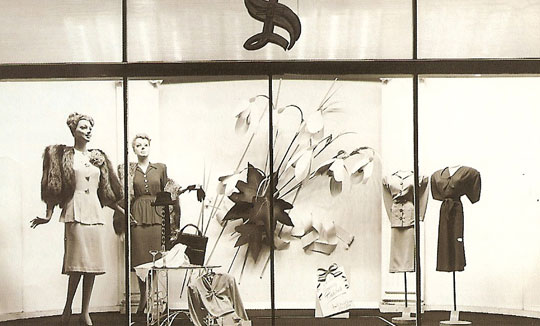
Against this backdrop, it might seem odd that a small group of “shopfitting display sundriesmen” should start a trade association. But it was that very situation that made them need one, to lobby the Government on their behalf. Timber, metals and acrylic sheet were in short supply, and some materials could not be had at all without a licence.
So on 17 September 1947 the Inaugural General Meeting took place at Grosvenor House, Park Lane, London, and the National Display Equipment Association was born. The minutes show that a good deal of time went on the membership fee, set at 2s 6d per £100 of invoiced sales.
The early issues were mostly about government, and some were complex, such as the inconsistent interpretation of Purchase Tax rates across the country. Members called for a standard rate and the Association negotiated it with the authorities. Display figures and busts suffered a crippling 125 per cent tax while workroom models paid none; the Association argued with the Treasury that a figure used as a display prop was a tool of the trade, and members were delighted when the Chancellor announced in his Budget that these items would be exempt. Plywood was so scarce that the Association persuaded the Board of Trade that an allocation was essential for the industry, and was allowed to issue the licences itself.
1958–1977: the exhibition years
By the late 1950s the country was on its feet again. In 1958 the Association started its own exhibition, Display Market Week, with 15 members showing their wares in bedrooms at the Waldorf hotel in London. The show grew every year, and by the end of the sixties it filled the Great Room and Ballroom at Grosvenor House.
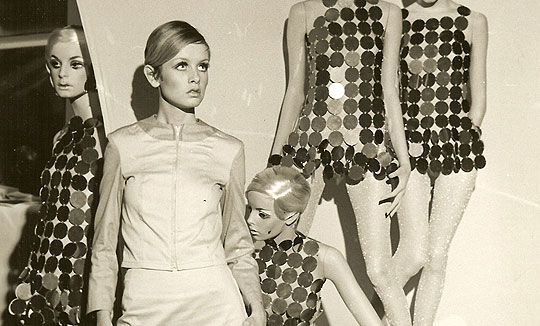
By 1972 the show had outgrown every London hotel and moved to Olympia as InterShop. It thrived until 1974, when the miners’ strike, a rail strike and the three-day week, with all display lighting banned, saw it go ahead lit only by Olympia’s old generators. In 1977 it joined Shopex, a show the Association supported until it closed in 1992.
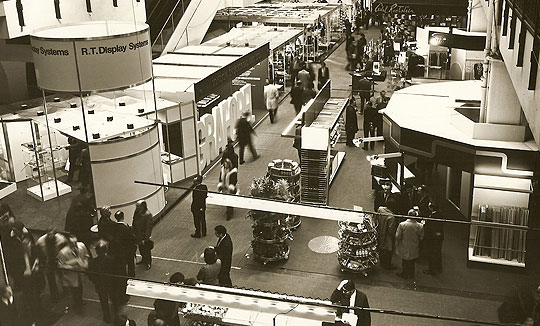
The Association also helped members to export. In 1966 it took a group of 26 British exhibitors, with support from the Board of Trade, to the first EuroShop in Düsseldorf, and it has been back to every EuroShop since. In 2014 it arranged grants of £45,000 for 30 British exhibitors. From 1994 it exhibited at ArabShop in Dubai and promoted the show to the UK market for 12 years.
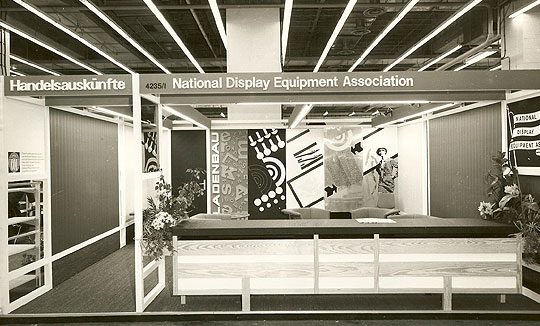
1973–2000: a service for members
In 1973 the Association moved into its own offices, and a year later it became the Shop and Display Equipment Association, reflecting the growing importance of shop equipment in the industry. With a new Director appointed in 1975, it turned from organising exhibitions to developing services that bring members business.
InfoLine, a telephone service through which retailers and designers could find retail display suppliers, was one of the first, and it still runs today. The first members’ discount scheme followed in 1976, with BUPA. In 1977 the Association launched its newsletter, Shoptalk; today it is a quarterly magazine.
The Association’s flagship publication first appeared in 1980 as a 32-page Catalogue of Shopfittings and Display, printed for a few hundred pounds “borrowed” from the exhibition budget. It grew into the full colour SDEA Design & Display Directory, now also online. In 1997 the SDEA backed a new show, Retail Interiors, sponsoring and exhibiting at it for several years.
By 1998 it was clear that the Association needed a website to act as an online Directory. It went live in time for EuroShop 1999 and gave the SDEA a worldwide presence for the first time. In 2000 the Association bought the freehold of the office in Caterham it had occupied since 1983.
2006 to today: bringing the industry together
Knowing that what every member needs is a steady supply of sales leads, the Association added an email lead service to InfoLine. In 2006 it launched a Meet the Buyer event, which sold out within days; it moved into London’s West End and became Connections. More networking followed, including the Christmas Lunch and the Annual General Meeting and lunch.
In 2018 the SDEA launched the Creative Retail Awards, celebrating the best in retail design and display. In 2022 came Creative Retail Connections, the SDEA’s networking events for retailers, brands, designers and suppliers. In 2026 the Awards moved to The Clapham Grand with more than 500 entries from five continents, members elected Claire White of Antalis as the first woman to lead the Association, and the SDEA launched LearnVM, its online course in visual merchandising.
Almost 80 years on, members’ needs have changed, but the Association matters as much as it did in 1947: it brings members sales leads, puts their work in front of buyers, saves them money and gives the industry a voice.
Join the SDEA
Apply online in about five minutes, or call us on 01883 348911 to talk it through.